Unlocking higher pitching velocity heavily relies on efficient linear momentum—the ability to transfer stored energy smoothly from the back leg toward home plate. To prevent early hip leakage and maximize force production, maintaining a deep hip hinge during stride is critical.
Inspired by effective Japanese pitching concepts, this simple drill using a tennis ball helps young pitchers master correct hip engagement and straight-line translation.
The Drill: Tennis Ball Hip-Hinge Stride
🎯 Objective: Teach pitchers how to load power into the back hip (hip hinge) and maintain a straight, explosive stride toward the target without losing posture or breaking mechanics.
How to Perform the Drill
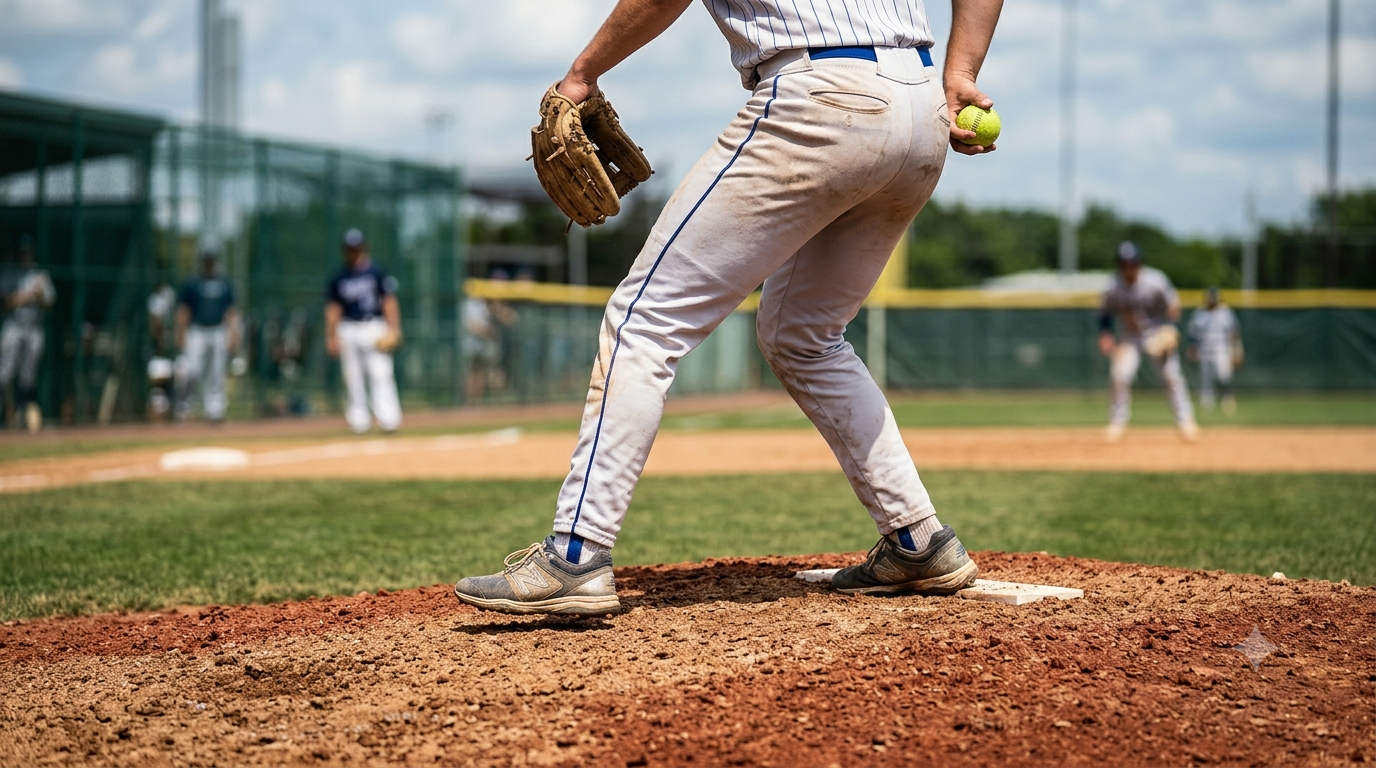
Set Up: Place a tennis ball in the crease of the back leg’s hip joint (the hip fold of the stance/pivot leg).
Engage the Hinge: Hinge at the waist by pushing the hips slightly backward, clamping the tennis ball securely in the hip fold. Keep the upper body upright—do not bend excessively at the chest.
Execute the Stride: Take a stride forward toward the target while keeping the ball clamped in place for as long as possible.
Volume: Perform 3 sets of 20 reps as part of a daily dynamic warm-up or mechanics routine.
— First-Pitch -少年野球育成悩み解決サイト- (@FirstPitchC2) July 3, 2026
Key Coaching Points & Corrections
1. Keep the Upper Body Upright
Common Error: Young players often flex their torso forward to trap the ball, which ruins pitching posture and pushes the arm slot too low (resembling a sidearm delivery).
Correction: Keep the chest up while creating the hinge by pushing the glutes back.
2. Avoid Early Knee Collapse
Common Error: Bending the back knee too early destroys the hip hinge, causing the ball to fall instantly.
Correction: Drive through the hip joint rather than sinking into the knee.
3. Progression Strategy
Start with a short, controlled stride to master the feeling. As the pitcher learns to hold the ball through hip engagement, gradually increase the stride length to build power.
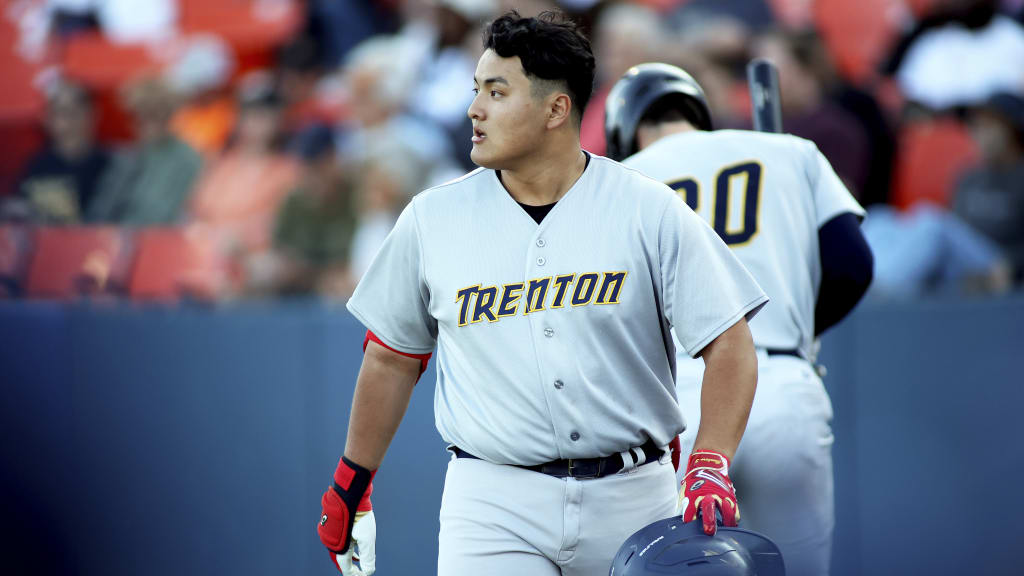
Every baseball fan in America now knows the name Rintaro Sasaki. When the #1 ranked high school prospect in Japan turned down the Nippon Professional Baseball (NPB) draft to play college ball at Stanford University, it sent shockwaves through the international scouting community.
But to truly appreciate the magnitude of his decision, American fans need to understand just how massive of a superstar Sasaki already is in Japan. We are talking about a level of hype that rivaled—and in some ways surpassed—the high school days of his legendary senior, Shohei Ohtani.
Here is a deep dive into the Rintaro Sasaki phenomenon, his unprecedented high school career, and why his journey to MLB via the NCAA is a historic gamble.
The Hanamaki Higashi Legacy: Following Ohtani’s Footsteps
To understand Sasaki’s clout, you have to look at his pedigree. He attended Hanamaki Higashi High School in Iwate Prefecture. If that name sounds familiar, it should: it’s the exact same high school that produced Shohei Ohtani and Yusei Kikuchi.
What makes the connection even deeper is that Hanamaki Higashi’s manager is Hiroshi Sasaki—who happens to be Rintaro’s father. Having coached Ohtani into a generational talent, the elder Sasaki knew exactly how to nurture a prodigy. But while Ohtani was a slender, hard-throwing two-way project in high school, Rintaro arrived as a fully formed, absolute tank of a power hitter.
Shattering the High School Record Books
Sasaki didn’t just break the Japanese high school home run record; he completely demolished it.
He finished his high school career with a mind-boggling 134 career home runs. To put that into perspective, the previous record held by Kotaro Kiyomiya was 111. Shohei Ohtani “only” hit 56 in his high school tenure. Sasaki’s raw power was so feared that opposing pitchers routinely refused to throw him anything near the strike zone.
During the iconic Summer Koshien tournament—Japan’s equivalent to NCAA March Madness but amplified to a national obsession—all eyes were glued to Sasaki. Every single at-bat was national news, with stadium crowds holding their collective breath whenever he stepped into the batter’s box.
Watch his legendary high school home run reel to witness the raw power firsthand
The Swing Mechanics: A Unique Hitting Quirk
For the analytical minds at *Baseball Kaizen Dojo*, Sasaki’s swing is fascinating. He possesses elite bat speed and an incredibly robust lower half that generates massive exit velocity.
However, scouts have noted a distinct mechanical quirk: a highly active hand movement/twitch right before he triggers his load. While this unique pre-pitch hand movement helps him rhythmically time his swing and launch balls into orbit against high school pitching, adjusting this mechanism against premium velocity and deceptive breaking stuff in the US will be his biggest developmental challenge at Stanford.
The NPB Ultimatum and the SoftBank Draft Plan
In Japan, Sasaki was the undisputed prize of the 2023 NPB Draft. In fact, powerhouse organizations like the Fukuoka SoftBank Hawks had publicly made it clear that they intended to select him as their #1 overall pick. In the NPB system, being a consensus first-round pick guarantees massive stardom, lucrative domestic endorsements, and a paved road to professional glory.
Had he chosen the NPB route, however, a massive bureaucratic barrier awaited him: The Free Agency (FA) and Posting System.
Under NPB rules, a player must log years of domestic service time before they can freely test international waters or be posted for MLB teams. For a generational bat wanting to prove himself against the absolute best in the world during his physical prime, staying in Japan meant waiting until his mid-to-late 20s to take a crack at Major League Baseball.
By bypassing the NPB draft entirely and choosing Stanford University, Sasaki bypassed the system. He chose to bet on himself, adjusting to the American lifestyle and college wood-bat leagues to become eligible for the MLB Draft directly.
The Defensive Outlook: A Dojo-Nushi’s Insight on the “Murakami” Reality
Let’s be realistic: Sasaki is not a finished product. Currently projecting as a first baseman, scouts frequently point out that his defensive tools—specifically his arm strength and lateral mobility—have significant room for improvement (*Kaizen*).
As the Dojo-Nushi here, I always tell our community that low defensive value heavily clouds a prospect’s draft stock, but a massive bat can overcome those questions. Look no further than the phenomenal performance of Munetaka Murakami with the Chicago White Sox.
When Murakami made the jump from Japan, scouts raised valid questions about his defensive home. Yet, he completely silenced critics by flashing historic rookie power, earning an All-Star nod through sheer, unadulterated offensive output.
But here is my key takeaway that many American fans overlook: Murakami’s path also highlights the immense pressure placed on one-dimensional bats in the US. If your glove doesn’t offer utility, any temporary slump or injury slowdown can cause you to get buried in the grueling American depth charts. And that brings us to Sasaki’s current pivotal moment after being selected in the 8th round of the MLB Draft.
The Carter Stewart Jr. Blueprint: My Vibe on Why the NPB is the Smart Alternative
From my perspective as the Dojo-Nushi, the stars are aligning for a highly compelling alternative: Sasaki should seriously consider returning to Japan to play in the NPB.
To understand my reasoning, we have to look at the fascinating case of Carter Stewart Jr.
Stewart was a heavily hyped American high school pitcher who famously bypassed the MLB system after being drafted 8th overall by the Braves in 2018, choosing instead to sign a historic contract with Japan’s Fukuoka SoftBank Hawks.
Take a look at his NPB career stats so far:
Year
Team
G
W
L
IP
SO
ERA
WHIP
2021
SoftBank
11
0
2
23.2
36
6.08
1.77
2022
(Farm)
–
–
–
–
–
–
–
2023
SoftBank
14
3
6
77.1
67
3.38
1.45
2024
SoftBank
20
9
4
120.0
105
1.95
1.08
2025
SoftBank
–
–
–
(Injured)
–
–
–
2026
SoftBank
10
5
3
47.0
42
5.17
1.64
Carter Stewart Jr.’s NPB career stats
Carter Stewart Jr. found a unique developmental path in the NPB
To be blunt, Stewart’s raw stats in Japan haven’t been mind-blowing, and his overall NPB record isn’t completely dominant. He even missed the entire 2025 season due to an injury.
However, look closely at the data. Notice his 2024 season? He posted a stellar 1.95 ERA over 120 innings. Even when he faced setbacks or struggled with injuries, the NPB environment offered him three massive luxuries that the volatile MLB minor leagues rarely provide to developing prospects:
Guaranteed High-Level Reps: SoftBank has consistently treated Stewart as a valuable piece of their first-team (*Ichi-gun*) roster. He is given patience, professional coaching, and actual meaningful game time to refine his craft against elite competition instead of being cut loose.
The Cost-of-Living Luxury: While NPB salaries for developing players might look modest compared to mega-MLB contracts, when you factor in Japan’s stable prices and lower cost of living, these players enjoy an incredibly affluent, comfortable lifestyle. They live like kings compared to American minor leaguers who are famously underpaid.
Avoiding the MLB Meat Grinder: Had Stewart stayed in the US as an unrefined prospect, he faced a massive risk of getting lost or permanently buried in the brutal depth charts of the minor leagues.
Conclusion: The 8th-Round Dilemma
When Sasaki originally chose Stanford, the dream was a fast-tracked path to becoming a first-round MLB mega-prospect. But falling to the 8th round completely changes the equation.
Signing as an 8th-rounder means a significantly lower signing bonus and a long, unforgiving grind through the American minors with zero guarantees—all while his defensive flaws and hitting quirks are picked apart under a microscope.
Meanwhile, the Fukuoka SoftBank Hawks—the very team that wanted him at #1 last year—are still right there waiting. By returning to Japan, Sasaki would immediately step into a massive spotlight, earn a highly comfortable living, get guaranteed first-team development opportunities, and completely avoid the risk of getting buried in the US.
An 8th-round draft slot is far from a failure, but in the grand chessboard of international baseball, taking the “Reverse Carter Stewart” route back to Japan might just be the ultimate *Kaizen* move for Rintaro Sasaki’s career.
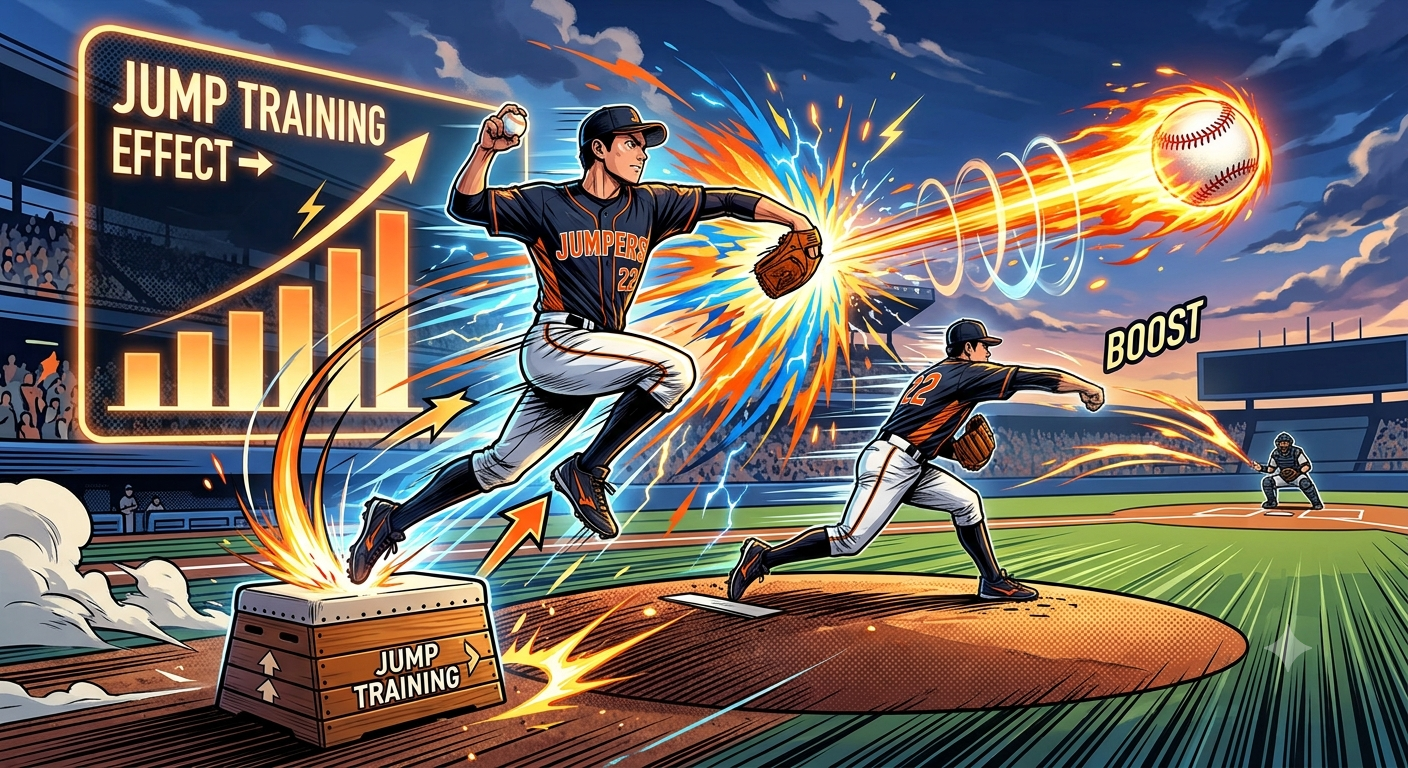
In the constantly evolving world of youth baseball, every coach is on the lookout for innovative ways to enhance their players’ skills. One approach that has gained traction, especially in Japan, is the implementation of specialized jump drills to improve pitching velocity. This technique not only addresses common issues such as lack of explosiveness and proper body mechanics but also helps young athletes harness their natural tendencies for better performance on the mound.
Practice Drill:
Here’s how to integrate the “Five Jump Drills” into your training regimen:
Jumping Mechanics
Focus on proper jumping form. Ensure players land softly with knees slightly bent to absorb the impact, promoting overall body control.
Drill #1: Vertical Jumps
Encourage players to jump as high as possible, using their arms to gain momentum. This builds explosive power in the legs, crucial for a strong pitching push-off.
Drill #2: Broad Jumps
Have players perform broad jumps to develop horizontal power. This helps improve the push-off phase of their pitching mechanics, leading to increased velocity.
Drill #3: Single-Leg Jumps
Incorporate single-leg jumps to enhance balance and unilateral strength. This will help pitchers maintain stability during their delivery, reducing the risk of injury.
Drill #4: Lateral Jumps
Use lateral jumps to develop agility and lateral power. This will prepare pitchers to better react to plays and maintain balance during their wind-up.
Drill #5: Box Jumps:
Introduce box jumps to combine strength training with explosive movement. This drill effectively conditions the body for the demands of pitching while also improving overall athleticism.
Reference Video & Background:
Here is a reference video that demonstrates these drills in action:
— First-Pitch -少年野球育成悩み解決サイト- (@FirstPitchC2) June 9, 2026
This video features players from Kiryu Daiichi Junior High School in Japan during their practice. Remarkably, their baseball program won the national championship just two years after the team was founded. Furthermore, their affiliated high school, Kiryu Daiichi High School, is a prestigious powerhouse with a history of winning the championship at Koshien, Japan’s legendary national high school baseball tournament.
Conclusion:
Implementing these five jump drills into your practice sessions can lead to remarkable improvements in your pitchers’ velocity and overall performance. In my experience, after integrating these drills, my team saw an average increase of 5 kilometers per hour in pitching velocity. By embracing this unique training method, you’ll not only aid your athletes in reaching their potential but also instill a sense of confidence and excitement as they develop their skills. Remember, every jump is a step toward becoming a better pitcher—let’s harness that energy and propel your team to success!